How to Build a High-Performance Co-Branded Credit Card Program: The 5 Step Playbook
Co-branded credit cards are quickly becoming one of the most powerful tools for brands looking to deepen loyalty and drive recurring revenue. However, not every program delivers the same results. The difference between a card that scales and one that stalls often comes down to how it is structured from the very beginning. Brands that invest in clarity, alignment, and a strong strategic foundation are the ones that consistently build a high-performance co-branded credit card program.
A high-performance co-branded credit card program combines customer value, strong issuer alignment, economic viability, compelling digital experiences, and continuous optimization. When these components work together, the card becomes a dependable engine for engagement, spend, and long-term loyalty. Drawing from proven industry frameworks and market insights, this playbook outlines the five essential elements required to design and scale a program that performs.
Strong Issuer Alignment and Shared Business Objectives
Co-branded cards operate within a multi-stakeholder ecosystem where three partners must work in sync: the brand, the issuing bank, and the network. When their goals or expectations diverge, even well-designed programs can struggle to grow.
High-performing programs ensure clarity on:
- Target customer segments
- Shared business goals
- Program KPIs and success metrics
- Revenue, cost, and risk-sharing structures
The most successful co-branded credit card partnerships operate with the mindset of a joint business plan, where all stakeholders collaborate closely from the very beginning.
When issuers and brands collaborate on product design, onboarding flows, CVP elements, and lifecycle strategies, performance accelerates across activation, spend, and retention.
A Category-Led, Differentiated Customer Value Proposition (CVP)
Today’s consumers are selective. They don’t respond to broad, generic incentives, instead they want relevance and contextual value.
Winning co-branded card programs:
- Anchor rewards in core spending categories
- Build emotional affinity through lifestyle-led propositions
- Offer tiered rewards instead of flat structures
- Deliver benefits aligned with customer intent peaks
Examples include:
- Travel-first cards with multipliers, lounge access, and forex waivers
- Food delivery or commerce cards with everyday accelerated rewards
- Subscription-led benefits for OTT, music, or wellness brands
As brands mature their programs, lifecycle performance becomes increasingly tied to customer behaviour patterns and evolving payment habits. According to global insights on the evolving payments landscape, these shifts are shaping how loyalty, engagement, and financial products converge in today’s digital ecosystems.
Related reading: How Technology Partners Drive Co-Branded Credit Card Success
Segmented Benefits and Spend-Based Engagement Strategy
In a high-performance co-branded credit card program, generic reward structures fail because they don’t recognise differences in customer behaviour. When every user receives the same value, high-intent customers feel underserved and low-intent users lack motivation, leading to flat engagement.
Top-performing programs use segmentation to tailor rewards and nudge behaviour more effectively. By grouping customers into spend-based cohorts and designing benefits around their actual patterns, brands create personalised value that drives consistent usage.
How segmentation improves performance:
- Benefits tailored to spend cohorts
- Milestone-based and gamified rewards that encourage progression
- Lifecycle-specific offers triggered by customer activity
- Behavioural nudges that build habit loops and increase spend velocity
Segmentation makes engagement more predictable and strengthens the overall performance of the co-branded credit card program.
Lifecycle Experience Design That Drives Activation and Usage
Issuance is only the starting point. The real drivers of card performance lie in what happens next. Especially within the first 90 days, when habits are formed and long-term value is determined, card performance becomes critical.
A strong lifecycle experience includes:
- Frictionless, mobile-first onboarding that gets customers from approval to ready-to-use in minutes
- Instant activation and intuitive card controls to reduce drop-off and encourage immediate usage
- Contextual nudges and personalized engagement campaigns triggered by behaviour and intent
- Seasonal and intent-led offers timed to high-spend moments and customer activity cycles
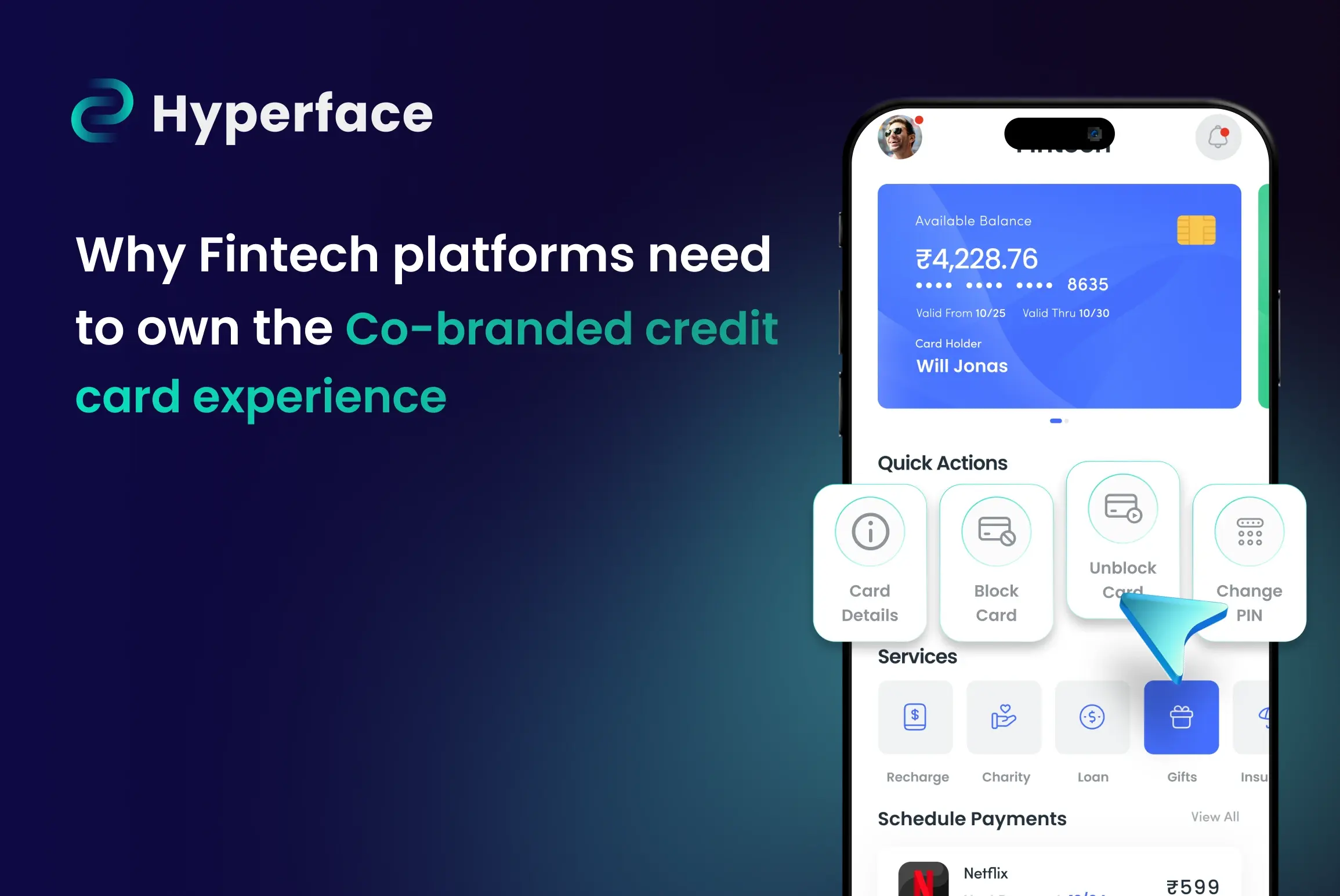
- Seamless access to rewards, transactions, statements, and support across a unified digital interface
Brands that invest in lifecycle design see better activation rates, TAT reductions, and higher monthly active cardholder ratios.
Real-Time Data Feedback Loops and Continuous Optimization
A high-performance co-branded credit card program depends on real-time data visibility to stay responsive and effective. With dashboards, cohort-level insights, and spend pattern analysis, brands and issuers can monitor how customers engage with the program and identify where interventions or enhancements are needed.
These insights fuel ongoing optimization—offer performance is measured continuously, campaigns are adjusted rapidly or automated, and monthly business reviews with issuers ensure alignment. In this model, data becomes the operating system, turning the program into a responsive, always-improving growth engine.
The Impact of a High-Performance Co-Branded Credit Card Program
When these five elements align, brands unlock:
- Faster onboarding and activation
- Higher monthly spend velocity
- Better unit economics and profitability
- Deeper customer loyalty and habitual usage
- Stronger brand affinity
- Clear commercial ownership and predictable scale
But there’s one critical enabler behind these outcomes: Card Program Management.
This is where top-performing brands differentiate themselves. Most underperforming programs fail not because of demand, but because no one is strategically managing the lifecycle, KPIs, and cross-stakeholder alignment.
How Hyperface Enables High-Performance Co-Branded Programs
Hyperface helps brands build and scale co-branded card programs by bringing together design, execution, analytics, and lifecycle management into a single operating model.
We support brands through:
Strategic & Technical Foundations
- Program design, issuer alignment, and KPI framework setup
- Customer value proposition (CVP) design and segmentation models
Customer Lifecycle Management
- Embedded onboarding and activation experiences
- Digital card management tools and SDKs
- Campaign orchestration and spend-based engagement
Data & Growth Intelligence
- Real-time analytics dashboards
- Cohort-driven optimizations
With Hyperface, brands go beyond launch milestones and build a sustained, insight-led card program that drives consistent engagement, stronger revenue and predictable scale.
Next in This Series
In the next blog, we’ll explain why program management is the single biggest determinant of scale. Stay tuned as we unpack why execution discipline and ownership determine whether co-branded card programs scale or stall.
 LinkedIn
  WhatsApp
  X (Twitter)